
 IT
IT 
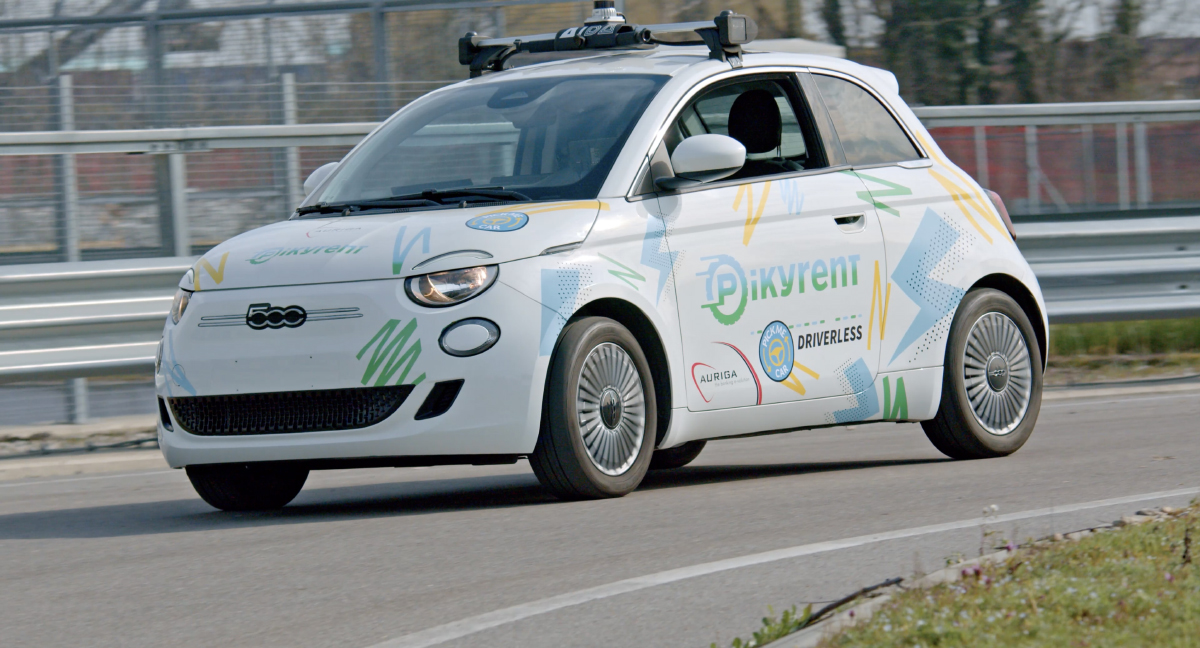
From traditional vehicle sharing to robo-sharing, the platform evolves to support new service models
Sharing mobility is entering a new phase. After years in which the sector focused mainly on expanding fleets and increasing the availability of services across cities, the real challenge today is making vehicles more accessible, closer to users and more efficient to manage.
Data collected by Pikyrent through the B2-Ride platform clearly shows how much vehicle proximity impacts service usage: around 60% of users abandon the rental process after checking the distance of available vehicles on the map. This confirms a key point for the future of shared mobility: success will not depend only on the number of vehicles deployed in an area, but on the ability to dynamically coordinate them according to real demand.
This is where B2-Ride strengthens its role as an enabling platform for the next generation of sharing mobility.
A platform ready for hybrid sharing mobility models
The robo-sharing project developed by Auriga with the technological contribution of Politecnico di Milano and tested with Pikyrent demonstrates how B2-Ride can support a hybrid shared mobility model: on one side, the familiar experience of traditional car sharing; on the other, the integration of autonomous driving features into operational phases that create less value for the end user.
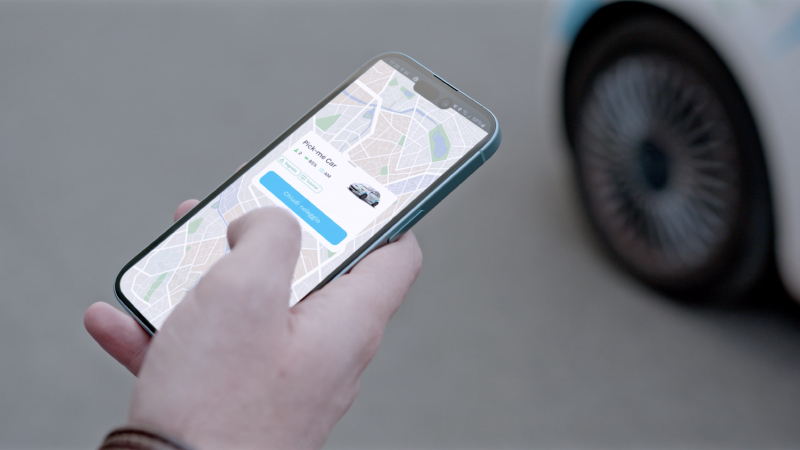
In the tested model, the user books the vehicle through the app and tracks its arrival at the pick-up point. Once on board, the user drives the vehicle as in a standard car sharing experience. At the end of the rental, the vehicle can return or reposition itself autonomously to a parking and charging hub.
Autonomous driving is therefore not treated as a separate layer, but as a functionality integrated into the platform: an extension of the service designed to simplify access, return, parking and fleet redistribution.
B2-Ride as the digital orchestration layer of the service
The proof of concept involved a Fiat 500e equipped with an autonomous driving kit and integrated into the B2-Ride platform, managed as part of the Pikyrent fleet. The value of the project lies precisely in this integration: B2-Ride does not simply support the rental process, but acts as the digital orchestration layer capable of coordinating vehicles, users, connected devices and operations.
This approach opens the way to increasingly software-driven sharing mobility, where the platform coordinates demand, vehicle availability, hubs, vehicle status and operational workflows in real time.
For operators, this means evolving their service without having to redesign it from scratch. For cities, it means enabling more efficient and less static fleets. For users, it means accessing a smoother experience, where the vehicle is not only visible on the map, but can become truly closer and more convenient to reach.
An enabler for next-generation shared mobility
Robo-sharing represents a concrete perspective for making vehicle sharing more accessible, scalable and efficient. But the real point is not only the autonomous vehicle: it is the platform that makes this model work.
B2-Ride is designed to support operators, companies and territories in the management of shared mobility services, integrating fleet management, mobile app, users, payments, IoT devices, monitoring tools and operational logic within a single ecosystem.
The evolution towards hybrid sharing mobility models confirms this vision: the future of shared mobility will be increasingly connected, modular and adaptive. And B2-Ride is already ready to enable it.
Ready to take your sharing mobility service to the next level?
With B2-Ride, you can manage shared electric fleets, integrate new operating models and build scalable, flexible mobility services ready for the future.
Request a demo and discover how B2-Ride can enable the next evolution of vehicle sharing.