
 IT
IT 
Why the B2-Ride and Invers Integration Makes Shared Fleet Management Easier
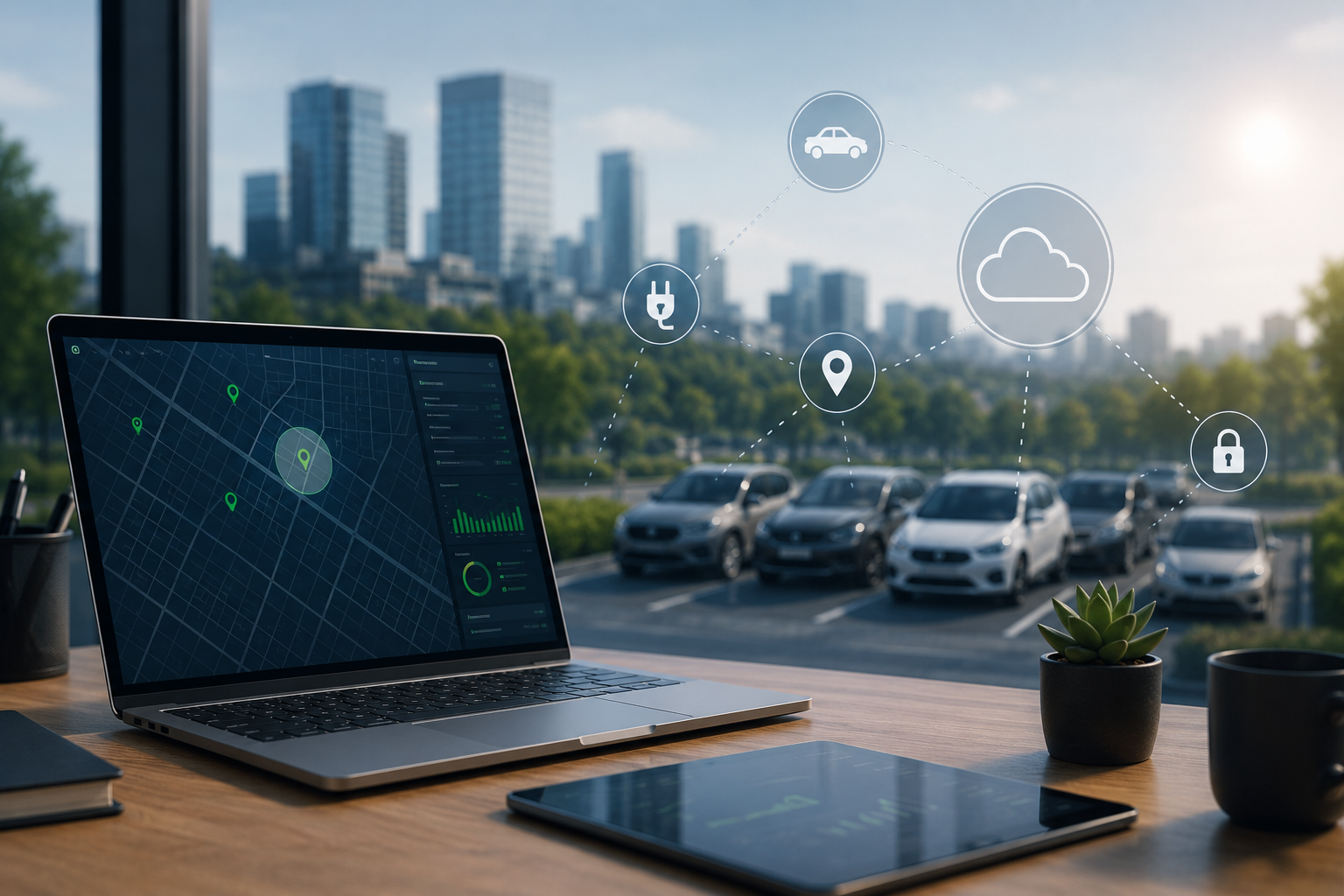
Shared mobility is evolving. Today, launching a successful mobility service requires much more than connected vehicles and a booking app. Operators increasingly need software platforms capable of integrating with proven IoT technologies, reducing deployment complexity and accelerating time-to-market.
That is the vision behind the integration between B2-Ride and Invers CloudBoxx.
By choosing Invers as its strategic IoT partner, Pikyrent has strengthened B2-Ride with one of the most widely adopted vehicle-sharing technologies in Europe and North America, making the platform even more interoperable, scalable and ready for the next generation of shared mobility.
Originally developed to power Pikyrent’s own shared mobility operations, B2-Ride is today also available as a white-label platform for fleet operators, rental companies, dealerships and corporate mobility providers.
What does the B2-Ride and Invers integration mean?
The integration enables B2-Ride to communicate natively with the Invers CloudBoxx installed inside the vehicle.
This allows operational data generated by the vehicle to flow directly into the platform, supporting vehicle availability, access control, rental management, fleet monitoring and day-to-day operations.
Instead of building complex integrations from scratch, operators can rely on a white-label SaaS platform that is already connected to a trusted IoT infrastructure.
The integration also opens the platform to operators that already rely on Invers technology and are looking for a comprehensive white-label SaaS solution without replacing their existing vehicle infrastructure. This reduces implementation effort while accelerating the launch of new mobility services.
Why is this integration important for fleet operators?
Managing a shared fleet involves much more than making vehicles available.
Operators must coordinate vehicle access, monitor fleet status, manage users, optimise maintenance, oversee charging operations and ensure a consistent customer experience.
When software and vehicle hardware operate as separate systems, these activities become more complex, expensive and difficult to scale.
Rather than developing proprietary hardware, Pikyrent chose to integrate with an IoT technology already trusted by leading shared mobility operators. This allows customers to combine the flexibility of B2-Ride with proven vehicle connectivity, reducing technical risk while building a more robust operating model.
What types of mobility services can B2-Ride support?
B2-Ride is designed for far more than traditional urban car sharing.
Its modular architecture supports a wide range of mobility use cases, including:
- Car sharing
- Scooter sharing
- Self-service vehicle rental
- Fleet delivery services
- Corporate mobility
- Shared electric fleets
- Vehicle dealerships
- Hotels and resorts
- University campuses
- Business parks
- Residential communities
This flexibility allows organisations to transform their vehicles into connected, digitally managed mobility services without developing their own technology platform.
From vehicle connectivity to operational scalability
Vehicle connectivity is only the starting point.
The real value comes when connected vehicle data becomes part of everyday operational processes—from reservations and digital access to fleet monitoring, maintenance, customer support and service optimisation.
An integrated platform enables operators to move beyond simple connectivity and build mobility services that are scalable, efficient and easier to manage over time.
Why is interoperability becoming a competitive advantage?
Operators are increasingly looking for solutions that are interoperable, scalable and quick to deploy.
Instead of replacing existing vehicle technology, they want software capable of integrating with specialised IoT infrastructures already deployed in the field.
This is precisely the strategy behind the B2-Ride and Invers integration: enabling organisations to preserve previous technology investments while benefiting from a modular white-label platform that reduces complexity and accelerates time-to-market.
For operators that already use Invers hardware, this means they can evaluate B2-Ride as a software layer designed to communicate with their existing telematics infrastructure.
Key Takeaways
- B2-Ride is a white-label SaaS platform for shared mobility and fleet management.
- B2-Ride now integrates natively with Invers CloudBoxx, one of the world’s leading IoT technologies for vehicle sharing.
- Fleet operators can reduce technical complexity while accelerating fleet deployment.
- The integration allows operators already using Invers hardware to adopt B2-Ride without redesigning their vehicle infrastructure.
- B2-Ride supports car sharing, self-service rental, corporate mobility, hospitality, dealerships and shared electric fleets.
- Integration is not just about technology—it enables more scalable, efficient and future-ready mobility services.
Frequently Asked Questions
What is B2-Ride?
B2-Ride is Pikyrent’s white-label platform for shared mobility and fleet management. It enables organisations to launch and manage connected vehicle services through a single digital platform.
What is Invers CloudBoxx?
Invers CloudBoxx is an IoT and telematics solution designed specifically for shared mobility. It enables secure vehicle connectivity and supports digital vehicle access, fleet monitoring and operational management.
Why did Pikyrent choose Invers as its IoT partner?
Pikyrent selected Invers because its CloudBoxx technology is widely adopted by established shared mobility operators. Integrating a proven IoT infrastructure with the B2-Ride platform reduces implementation complexity, shortens deployment time and offers customers a more scalable operating model.
What are the benefits of integrating B2-Ride with Invers?
The integration enables B2-Ride to communicate directly with Invers CloudBoxx, simplifying fleet deployment, reducing technical complexity and improving operational efficiency.
Is B2-Ride only designed for car sharing?
No. B2-Ride supports multiple mobility models, including self-service rental, corporate mobility, fleet delivery, dealerships, hospitality, university campuses, business parks and shared electric vehicle fleets.
Why should fleet operators choose an integrated mobility platform?
Integrated platforms simplify operations, improve fleet visibility, reduce implementation effort and provide the flexibility needed to scale mobility services over time.
Looking to launch or expand a shared mobility fleet?
Whether you’re building a new mobility service or modernising an existing fleet, B2-Ride helps you create a connected, scalable and future-ready operation.
Discover how B2-Ride can support your shared mobility project and help you manage connected vehicle fleets with greater efficiency and flexibility.
- Published in Blog